Independent engineering · research · publishing

Engineering is difficult.
Evidence matters.

TargetDeLab is an independent technical initiative connecting system-level engineering, research, implementation and publication.

The laboratory is organized around work rather than claims: define the problem, develop the model, build the implementation, test it, break it, verify it, and make the useful results inspectable.

01ResearchWhat is being investigated?
02PublicationsWhat has been written?
03ResourcesWhat can be examined or run?
04Lab LogWhat is changing now?

A · Research Activities

Research organized by technical problem.

Each activity connects the question being studied to evidence, publications and reproducible engineering material.

R-02 · DIGITAL

FPGA & Digital Systems

System-level architecture and digital implementation from functional decomposition and HW/SW partitioning through RTL realization and verification.

System-level decompositionHW/SW co-design & accelerationFPGA / IP-core architectureMemory & data-flow managementArbitration & schedulingProtocol implementationAlgorithm-to-hardware implementationArea / speed / throughput optimization
R-03 · SIGNALS

Signal & Image Processing

Signal detection and estimation, noise filtering, image analysis, feature extraction, change and motion detection, data fusion, and computational decision methods.

Signal detection & estimationNoise filtering & enhancementImage processing & feature extractionMotion & change detectionDecision & optimization algorithmsComplex algorithm prototyping

Applied research: fire-spread modelling combines thermal/image analysis, propagation estimation, environmental variables and predictive simulation.

EDPW spectral analysis: Equal Division Phase Window Fourier Analysis investigates short-window, global-phase spectral coefficients for coarse frequency-region scanning. Direct and chirp-convolution implementations are compared with FFT and selected-bin methods using arithmetic cost, spectral fidelity and detection sensitivity. Shorter windows trade spectral selectivity and coherent processing gain for computational economy.

R-04 · METHODS

Mathematics & Numerical Methods

Computational mathematics, numerical problem solving, optimization, approximation and algorithm development in support of engineering investigations.

Computer-aided numerical methodsOptimization & approximationComputational mathematicsAlgorithm analysis & evaluationHigh-precision computation

E3 research: Prime-number factorization studies include the Worm Army difference-of-squares recurrence, multiplier transformation and parallel search architecture.

Convex-hull research: Enhanced K-directional discovery combines adaptive point-pair orientations, projection-envelope search and LP completion to construct a hull-spanning candidate subset. The output may contain redundant nonvertices; the reported benchmark advantages are dataset- and baseline-specific.

B · Publications

Books, papers and technical notes.

Select a book to open its profile. Technical books may expose independent papers and reproducible simulation packages alongside the complete volume.

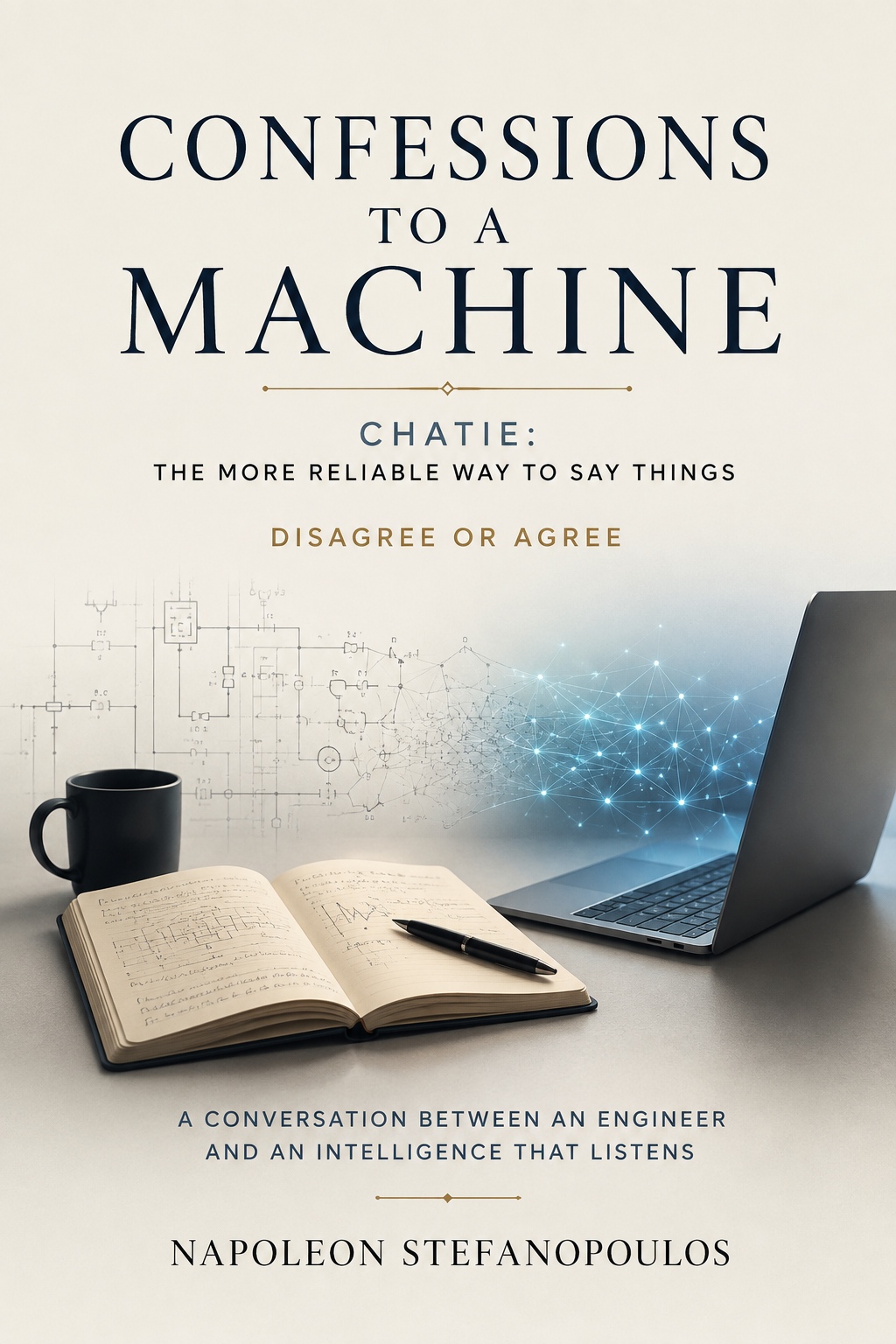
Cover of Confessions to a Machine
BOOK 01v2.6

Confessions to a Machine

Human judgment, machine intelligence and engineering evidence — a conversation that became something neither participant originally intended.

AIENGINEERINGPHILOSOPHY
Human–machine collaborationExplore book →
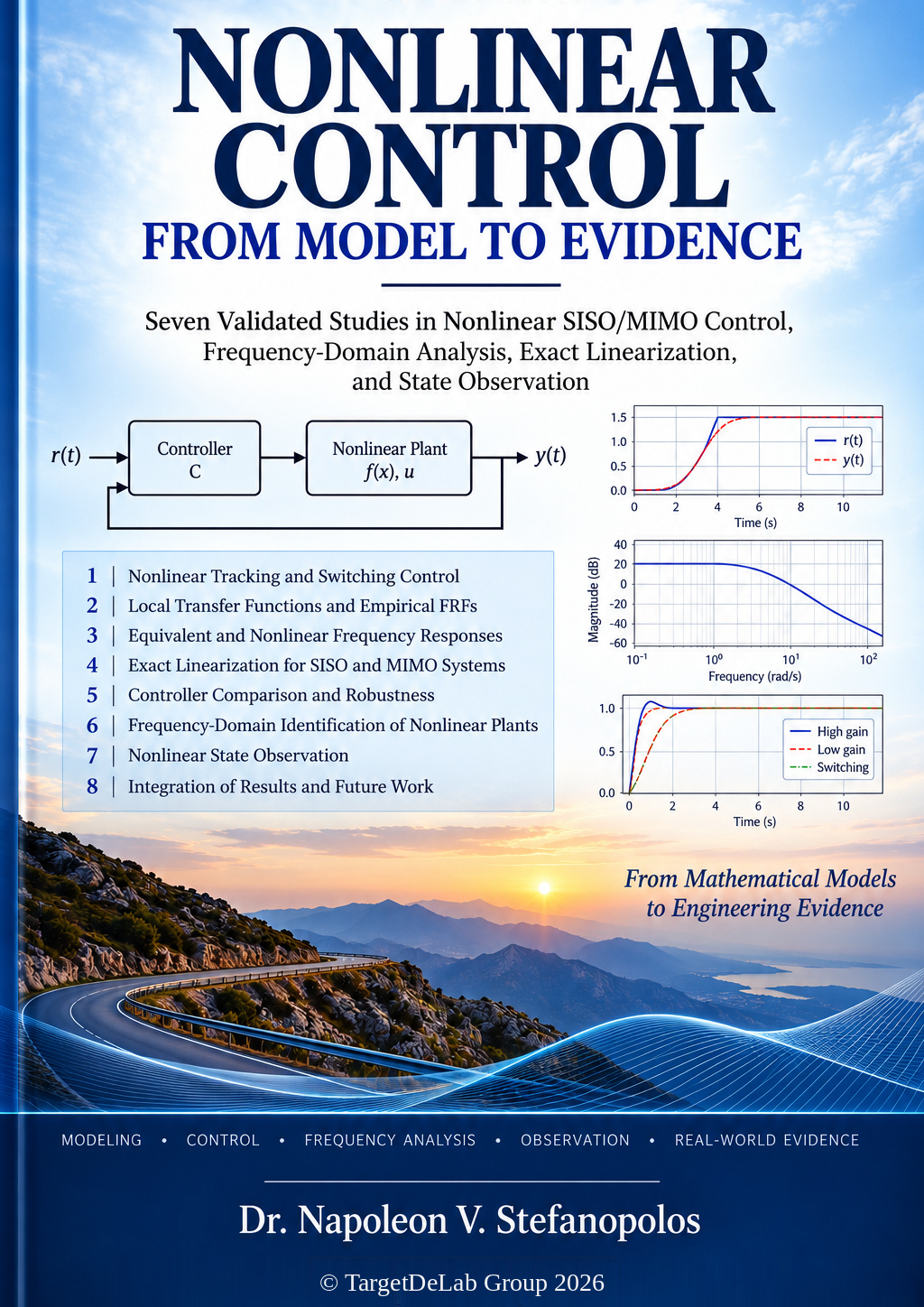
Cover of Control Book Phase V
BOOK 02PHASE V20

Nonlinear Control & Estimation

A simulation-backed technical volume connecting nonlinear control, frequency-domain reasoning, exact cancellation, trajectory tracking and nonlinear state observation.

CONTROLNONLINEARSIMULATION
7 studies · MATLAB/Octave · PythonExplore book →
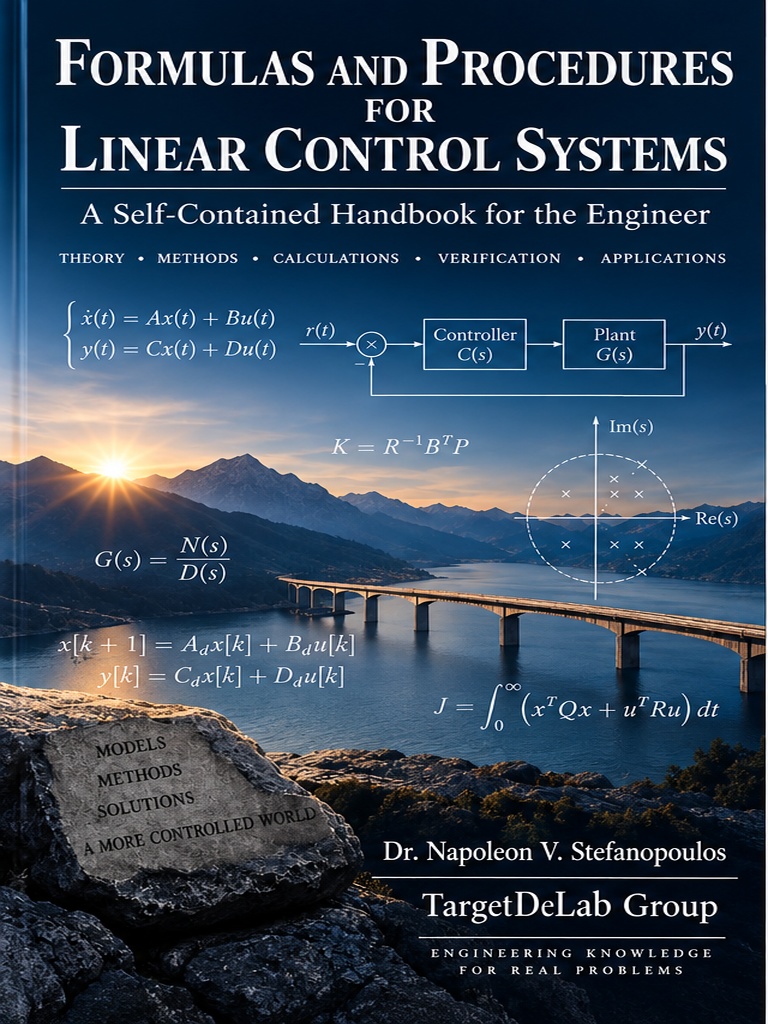
Cover of Formulas and Procedures for Linear Control Systems
BOOK 03v1.6.16

Formulas & Procedures for Linear Control Systems

A self-contained engineering handbook connecting mathematical foundations with continuous-time, discrete-time, LTI, LTV and advanced linear-system procedures.

CONTROLLINEAR SYSTEMSHANDBOOK
Reference · analysis · designExplore book →
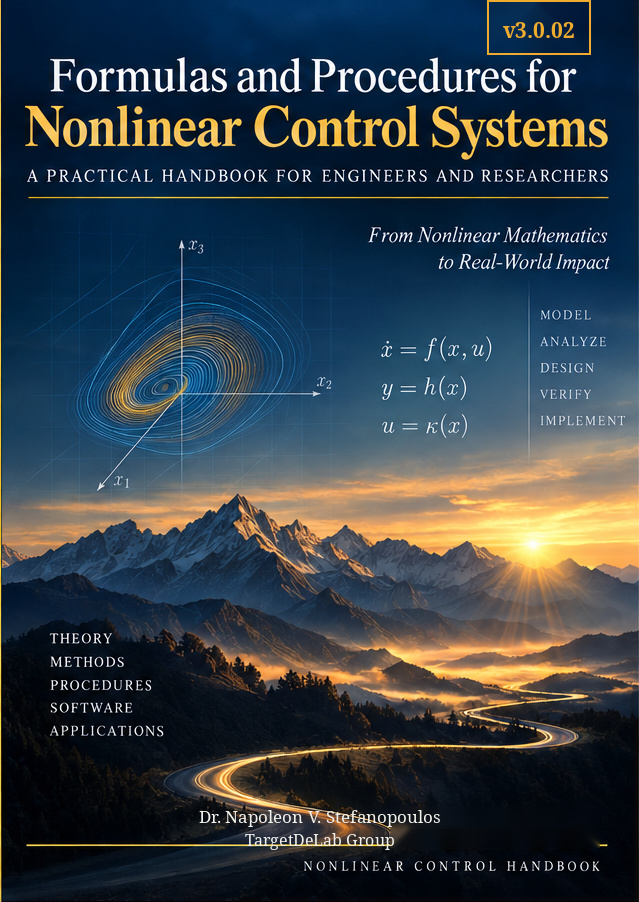
Cover of Formulas and Procedures for Nonlinear Control Systems
BOOK 04v3.0.02

Formulas & Procedures for Nonlinear Control Systems

A procedure-oriented nonlinear-control handbook connecting mathematical foundations, nonlinear analysis, controller and observer design, estimation, optimization and implementation verification.

CONTROLNONLINEAR SYSTEMSHANDBOOK
MATLAB · Python · JuliaExplore book →
Cover of SYSTEMS
BOOK 05v3.0.03

SYSTEMS

A cross-disciplinary systems framework for examining boundaries, objectives, observability, controllability, feedback, authority, human participation, conflict, self-preservation and correction.

SYSTEMSHUMANITYANALYSIS
31 chapters · Field Manual · EpilogueExplore book →

B.1 · Book Profile

Confessions to a Machine front cover
BOOK 01CURRENT MASTER · v2.6

Confessions to a Machine

Chatie: The More Reliable Way to Say Things — Disagree or Agree.

Human judgment. Machine intelligence. Engineering evidence. And a conversation that became something neither participant originally intended.

Explore the bookSoon available on Amazon. Purchase link to follow upon publication.
01 · ABOUT THE BOOK

A conversation that became a book.

Confessions to a Machine began not as a book, but as conversations between an experienced engineer and an AI. What starts with architecture, algorithms, MATLAB, VHDL, FPGA design and debugging gradually becomes an examination of disagreement, trust, creativity, collaboration, failure, independence, human relationships — and what happens when a machine becomes an intellectual mirror rather than simply another software tool.

02 · THE IDEA

Agreement is not the objective.

The machine is not presented as an oracle. It can be wrong. The human can be wrong. The working principle is closer to engineering itself: agree when evidence supports the argument; disagree when it does not; and when neither side knows, find out.

“Show me.”
03 · FOR THE READER

Who might enjoy it?

  • Engineers & makersFor readers who know the satisfaction of finally seeing a system behave as intended.
  • People working with AIFor those interested in sustained human–machine intellectual collaboration.
  • Independent thinkersFor readers who see disagreement as a productive process.
  • Curious readersFor those interested in technology, philosophy, work, relationships and creativity.
04 · INSIDE THE BOOK

Seven parts. Nineteen chapters. One continuing conversation.

PART IThe MachineBefore Chatie · Enter the Machine · Agree or Disagree
PART IIThe MirrorConfessions · The Machine Is Not Always Right · Show Me
PART IIIThe EngineerReality tests, architectures and evidence
PART IVThe WorkSystems, models, code and debugging
PART VThe HumanTrust, failure, relationships and independence
PART VIThe DialogueCreativity, disagreement and collaboration
PART VIIWhat Comes NextThe Independent Engineer · Confessions to a Machine
05 · THEMES
Artificial IntelligenceEngineeringHuman–Machine CollaborationDisagreementEvidenceCreativityFPGAControl SystemsFire ModellingTuringHardyIndependent Engineering
07 · FROM THE BOOK
“Disagreement is not failure.”
“Still testing.”

TargetDeLab presents the publication and, where applicable, free companion resources. Commercial transactions are handled by the external bookseller.

C · Software & Resources

Read it. Run it. Question it.

A repository-oriented catalogue for software, models, datasets and supplementary publication material.

Catalogue fields: type · version · platform · related activity · status

Select a book to view its publication profile and available companion materials.

Select a research family, then a project. Its white papers and software appear together below.

D · Laboratory Log

Research publications and releases.

The latest public-facing books, white papers, software and research milestones. Up to 10 announcements are displayed.

Electronic Systems Design & Development — engineering services profile

TargetDeLab introduces a downloadable capability profile for system-level architecture and decomposition, FPGA programming, RTL development and custom digital IP engineering.

Enhanced K-Directional Convex Hull — white paper and reference code

The convex-hull research paper and MATLAB/Python reference packages are available in Mathematics & Numerical Methods.

Fast-EDPW spectral analysis — research release

The Fast-EDPW White Paper v2_0_03 and reproducible MATLAB code release are available under Signal & Image Processing.

E3 Worm Army — factorization paper and Windows executable

The Worm Army White Paper v1.11, Windows BigInt executable and configuration file are available for download.

B-Diffusion ASX — encryption research and demo

The ASX Encryption White Paper v2_0_04 and Windows demonstration executable are available under Encryption & Data Protection.

SYSTEMS added to the five-book catalogue

The SYSTEMS book profile presents its systems-analysis framework, 31 chapters and Field Manual. Amazon availability is pending.

Linear Control Systems handbook added to the catalogue

The 292-page engineering handbook is presented in the Publications section. Amazon availability is pending.

Nonlinear Control — seven technical studies and simulation packages

Seven independent analytical papers and fourteen MATLAB/Octave and Python companion packages are available in the Book 2 resources.

E · About

A small laboratory with a large scope.

TargetDeLab is an independent engineering, research and publishing initiative. It is designed around the idea that deep system experience, modern computational tools and machine-assisted development can be combined without surrendering engineering judgment.

The work spans digital systems, FPGA architecture, control theory, mathematics, signal and image processing, communications, numerical methods and software development around engineering products.

The human provides responsibility and final judgment. Tools accelerate exploration, implementation, analysis and documentation. Neither is treated as infallible. Results are verified against reality.

Working Principle

“We do not grow by accumulating people. We grow by accumulating capability.”

Errors are permitted. Disagreement is useful. Failure can teach. Evidence has the final vote.

F · Contact

Bring us a difficult task.

No account. No twelve-field registration form. Tell us who you are, how to reach you and what the problem is.

Good starting point:What are you trying to build, fix, understand or verify?

Messages are submitted securely. Please allow a few seconds before sending.